
Endometriosis Is More Than a “Gynecologic Condition”
Endometriosis is a complex inflammatory disease where tissue similar to the uterine lining
grows outside the uterus. Over time, it can cause:
- Scar tissue and adhesions
- Chronic inflammation
- Distorted pelvic anatomy
- Pain with bowel movements or urination
- Fertility challenges
- Nerve irritation
- Organ involvement beyond the reproductive system
In some patients, disease may involve the:
- Bowel
- Bladder
- Ureters
- Diaphragm
- Chest cavity
- Appendix
- Pelvic blood vessels
- Deep pelvic spaces
This is why advanced endometriosis surgery often requires more than one specialty in the
operating room.
What Is a Multidisciplinary Surgical Team?
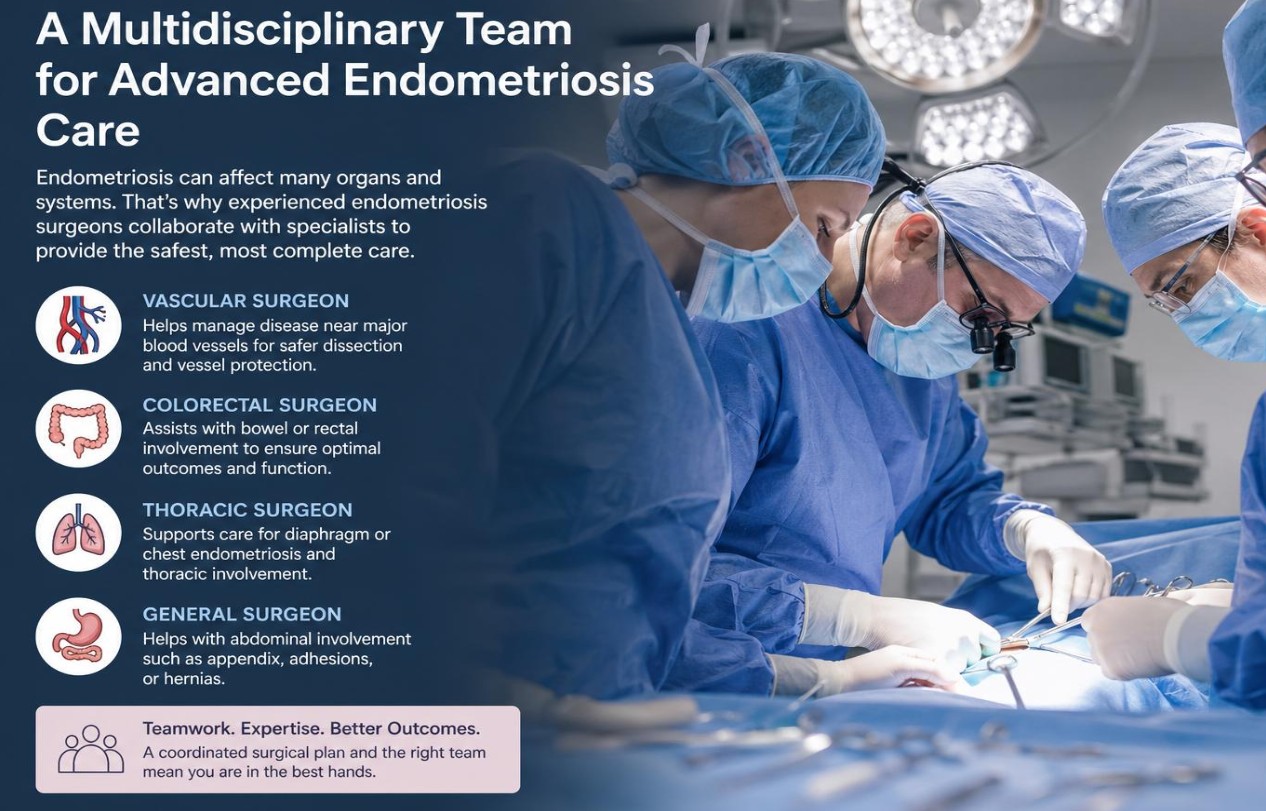
A multidisciplinary team means your endometriosis surgeon collaborates with other highly
trained surgeons depending on where disease is located.
This may include:
Vascular Surgery
If endometriosis is close to major pelvic blood vessels or causing dense scar tissue near
vascular structures, a vascular surgeon may assist in safely protecting or repairing vessels
if needed.
Colorectal Surgery
If disease affects the rectum, sigmoid colon, bowel wall, or causes painful bowel
symptoms, a colorectal surgeon may be needed for shaving, discoid excision, or bowel
resection when appropriate.
Thoracic Surgery
For patients with chest pain, shoulder pain, collapsed lung episodes, catamenial
symptoms, or suspected diaphragmatic/chest endometriosis, thoracic surgeons may be
involved.
General Surgery
A general surgeon may assist with appendix involvement, abdominal adhesions, hernias,
gallbladder considerations, or broader abdominal surgical needs.
Urology / Urologic Surgery
If disease involves the bladder, ureters, kidneys, or urinary symptoms, urologic specialists
may be essential.
Why This Matters for You
- Better Surgical Planning
Experienced surgeons do not “guess” in the operating room. They prepare.
This often includes:
Reviewing MRI or imaging beforehand
Mapping suspected disease locations
Planning needed specialists in advance
Discussing risks and options with the patient
Creating a safer operative strategy
That preparation can reduce surprises and improve outcomes.
- More Complete Disease Removal
When the right specialists are available, complex disease can often be addressed during
one well-planned surgery rather than requiring multiple procedures later.
- Improved Safety
If bowel, bladder, vessels, diaphragm, or nerves are involved, having the correct expert
present may improve safety and precision.
- Greater Confidence for the Patient
Knowing your surgeon has a trusted network and team can provide reassurance that your
case is being taken seriously and handled thoughtfully.
Questions Patients Can Ask a Surgeon
If you are considering surgery, it is reasonable to ask:
Do you work with colorectal surgeons if bowel disease is found?
Do you collaborate with thoracic specialists for diaphragm or chest endometriosis?
What happens if disease is near major vessels or ureters?
Do you review imaging before surgery?
How do you plan complex cases?
Have you managed cases like mine before?
These are smart, informed questions—not difficult ones.
The Goal Is Not Just Surgery—It Is Strategy
Great endometriosis surgery is not only about technical skill. It is about:
Experience
Judgment
Surgical mapping
Team coordination
Safety
Long-term thinking
The strongest surgeons understand when to lead—and when to bring in the right
specialists.
Final Thoughts
If a surgeon has built a multidisciplinary team around complex endometriosis care, that
often reflects experience, humility, and commitment to patient outcomes.
For patients, that can mean peace of mind:
You are not walking into surgery with one person. You are walking in with a plan.